Reviewed by Registered Massage Therapist Nuchanart (Mew) Kachowski
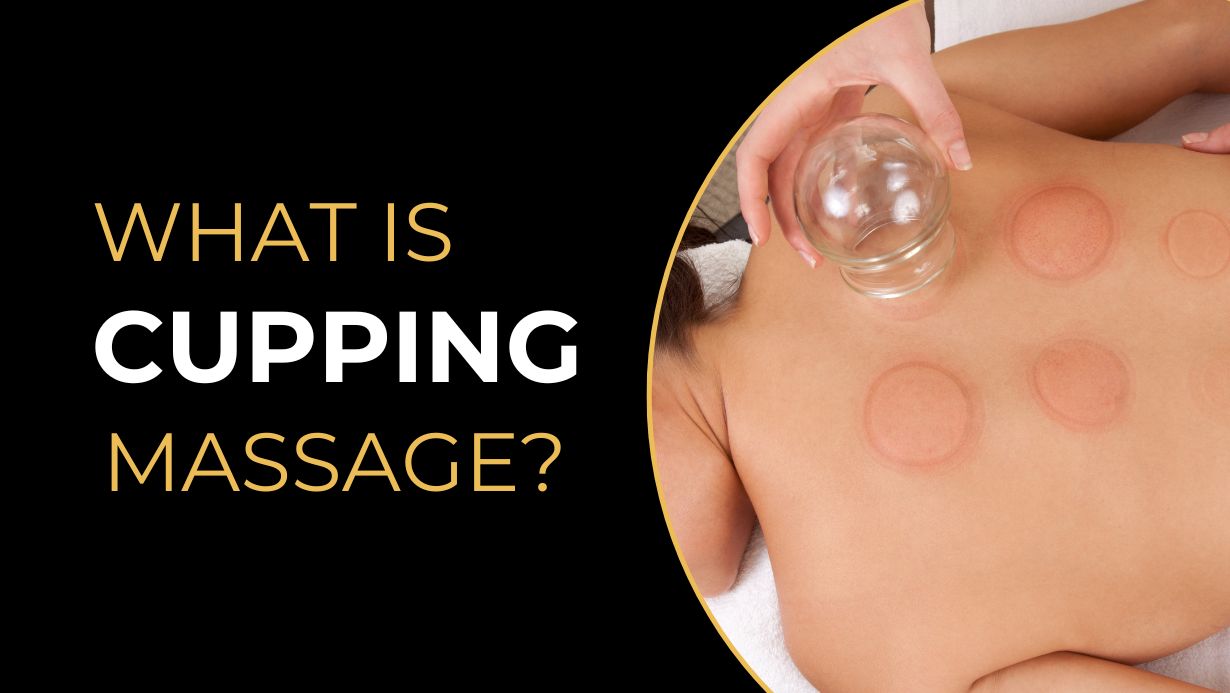
Cupping massage is a technique where your therapist places cups on the skin and uses suction to lift it, along with the tissue underneath. Regular massage presses down on that tissue. Cupping pulls it up, which gives tight areas a different kind of stretch. At Gold Pro, cupping is always paired with a regular massage, such as deep tissue and cupping.
The round marks it can leave are the part most people have seen, and often the reason they hesitate. The marks come from the suction, they are usually painless, and they fade on their own.
How Does Cupping Massage Work?
Cupping massage uses suction to draw the skin and the tissue beneath it up into a cup, lifting and stretching an area that regular massage would press down on.
Think about how a tight spot feels when someone presses into it. Pressure pushes the tissue down against the muscle and bone underneath. A cup does the opposite. It holds the tissue up and lets it stretch in place.
In other words, massage pushes and cupping pulls, and a cupping session uses both.
Most people feel the effect as a deep, steady pull. Tight areas across the back and shoulders often feel looser afterward, and the skin under the cups usually feels warm as blood moves into the area.
Cupping has been used in many cultures for a very long time, and some traditions make big claims for it. What people most often notice in a massage setting is simpler: muscles that feel less tight and move a little more easily for a while afterward.
What Happens During a Cupping Massage?
A cupping massage at Gold Pro is a regular deep tissue, relaxation, or Thai oil massage with cupping built in, so you still get hands-on massage and the cups are used where they help most.
You do not book cupping on its own. You choose the massage you want, and your therapist brings in the cups once the muscles are warmed up.
Before the Cups Go On
Your session starts with a short conversation about where you hold tension, how much pressure you like, and if you have had cupping before. Your therapist then warms the area by hand with regular massage strokes so the tissue is ready for suction.
When the Cups Are On
The cups can be glass, silicone, or bamboo. Some are placed and left in one spot for a few minutes. Others are glided slowly across oiled skin, which works a wider area and feels like a slow, pulling massage stroke. Cups usually go where tension builds most, often the upper back, the shoulders, and along the spine.
If you want to see it before you book, the video below shows cupping during a session at Gold Pro.
After the Cups Come Off
Your therapist finishes with regular massage strokes to settle the area. The skin may look pink or show round marks, and the muscles often feel warm and a little worked, similar to how they feel after a deeper massage.
Does Cupping Massage Hurt?
Cupping massage usually does not hurt. Most people describe a firm pulling sensation, like a strong stretch in one spot, that is most intense in the first few seconds and then eases as the tissue adjusts to the suction.
It should never feel sharp. Your therapist controls how much suction each cup has and can lighten it or lift a cup off at any point, so tell them if something feels like too much. On very tight areas, a first session can feel stronger than later ones.
Afterward, the area may feel tender or warm for a day or so, much like after a deeper massage. That settles on its own.
Being nervous about cupping is normal. One client who had only ever heard of it admits she was a bit afraid before her first Thai oil and cupping session with Mew. You can read what changed her mind in her Thai oil and cupping story.
What Do Cupping Marks Mean?
Cupping marks are round pink, red, or purple circles left where the cups sat, caused by suction drawing blood toward the surface of the skin. They are usually painless and fade on their own.
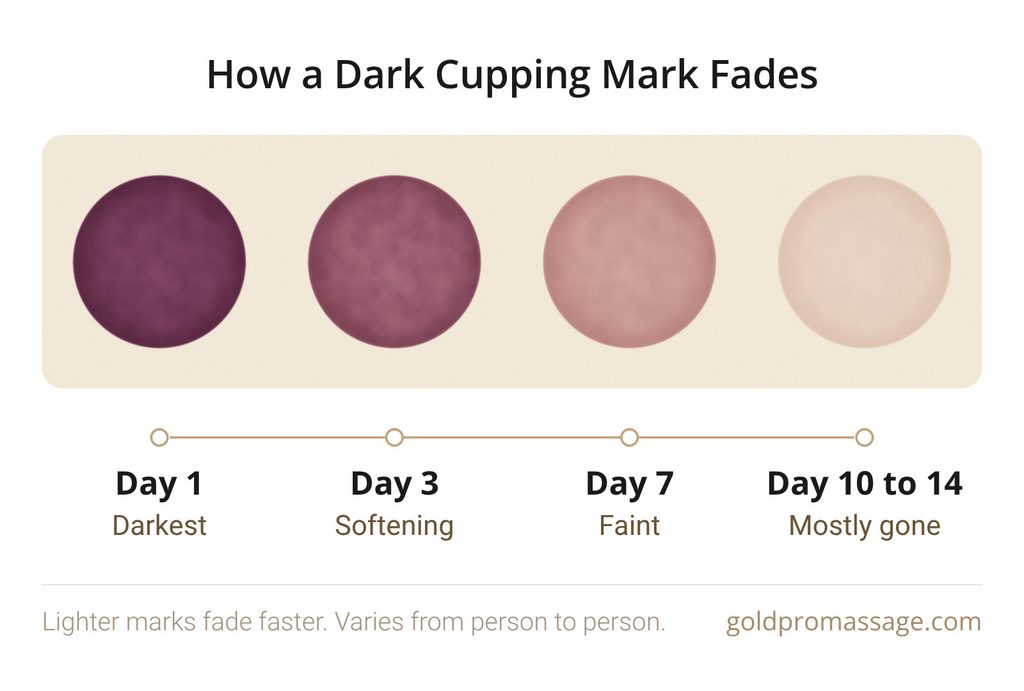
The marks look a lot like bruises, which is why they worry people. A bruise from a bump comes from an impact. Cupping marks come from lifting, and they are usually far less tender than they look, even the dark ones.
Why Some Spots Mark More Than Others
How dark the marks get varies from person to person, and even from spot to spot on the same back. Some people mark easily and some barely mark at all. Cups left in one place longer, or with stronger suction, usually leave darker circles. Gliding cups tend to leave lighter, streaky marks.
A dark mark does not mean something was wrong with that spot, and it does not mean anything was drawn out of your body. It mostly reflects how strong the suction was, how long the cup stayed, and how easily your skin marks in general.
How Long Do Cupping Marks Last?
Most cupping marks fade within a few days to a week. Darker marks can take up to two weeks. They lighten gradually and need no special care while they fade.
Planning Around an Event
If you have a wedding, a photo shoot, a swim meet, or a beach trip coming up, mention it at the start of your session. Your therapist can keep the cups off visible areas, use lighter suction, or leave cupping out until after the event.
Your first cupping session shows you how the pull feels and how your skin marks. After that, you and your therapist can decide how much cupping you actually want.
What Can Cupping Massage Help With?
Cupping massage may help ease muscle tension and tightness that has not fully let go with regular massage, especially across the upper back, the shoulders, and along the spine.
Most people who add cupping already get massage and find that certain spots never quite release. Cupping gives those spots a different kind of input than pressure alone.
Stubborn Upper Back and Shoulder Tension
Tension across the upper back and shoulders is one of the most common reasons people add cups. Desk work, driving, and lifting load these muscles day after day, and many people find the lifting effect helps the area feel less locked up afterward.
Stiffness and Restricted Movement
When a muscle feels stiff, moving through a full range can feel like pulling against a rope. Some people find cupping, especially gliding cups combined with Thai stretching, helps the area move a little more easily for a while afterward.
Tension That Keeps Coming Back
For tension that returns between appointments, some people add cupping to their usual massage every few visits instead of every time. That keeps it as a tool for the areas that need it most.
Cupping does not replace care from your doctor or physiotherapist for an injury or medical condition. If you are new to massage altogether, a regular session first can show you how your body responds to pressure before you add suction.
Which Cupping Massage Should You Book?
Gold Pro offers cupping as part of three massages: Deep Tissue & Cupping, Relaxation & Cupping, and Thai Oil & Cupping. The cupping is similar in all three. What changes is the massage around it.
| Deep Tissue & Cupping | Relaxation & Cupping | Thai Oil & Cupping | |
|---|---|---|---|
| Massage style | Slow, firm pressure into deeper muscle | Long, flowing Swedish (Relaxation) strokes | Thai stretching and kneading with oil |
| Often chosen for | Stubborn back and shoulder tension | Stress and general tightness | Stiffness and restricted movement |
| Session lengths | 30, 45, 60, 90, or 120 minutes | 30, 45, 60, 90, or 120 minutes | 60, 90, or 120 minutes |
If you are unsure which to pick, start with the massage you already like and add cups to it. Your therapist can use more or less cupping once they see how your body responds. For help choosing between firm and lighter pressure, the Swedish (Relaxation) vs deep tissue comparison breaks it down, and our guide to deep tissue massage explains the firmer option in full.
One detail to know before you book: the complimentary hot stones that come with Gold Pro’s full-body massages are not included when cupping is part of the session.
When to Check With a Provider First
Cupping is safe for most healthy adults, but it is not the right fit for everyone. It may be worth checking with your doctor before booking if you:
- Take blood thinners or bruise very easily
- Have a bleeding disorder or a history of blood clots
- Have a skin condition, sunburn, open wound, or recent scar in the area to be treated
- Are pregnant
- Are recovering from surgery or managing a serious health condition
Let your therapist know about any of these at the start of your session. They can skip cupping in certain areas, lighten the suction, or suggest a different massage.
Cupping Massage FAQ
What Should I Wear for a Cupping Massage?
Cupping needs bare skin and oil, so the area being worked on is undressed and draped with a sheet around it. You only undress to your comfort level, and everything else stays covered.
Can I Try Cupping in a Shorter Session?
Yes. Deep Tissue & Cupping and Relaxation & Cupping both start at 30 minutes, and the 30-minute trial massage on the Gold Pro services menu lists cupping as one of the options to try. A short session is an easy way to see how the suction feels and how your skin marks.
Is Cupping Massage Covered by Insurance?
Cupping at Gold Pro is part of a registered massage therapy session, and the studio direct bills many insurance providers. Coverage depends on your plan, so check the direct billing page or with your provider before your appointment.
How Often Should You Get Cupping Massage?
There is no set schedule. Some people add cupping every few visits to a regular deep tissue routine, and others book it for a stretch of weeks when one area is being stubborn. Your therapist can suggest a rhythm once they see how your body responds.
Cupping Massage in Sherwood Park
If regular massage helps but a few spots never fully let go, adding cupping may be a reasonable next step. It fits into the massage you already book, so you do not need to change your routine to try it.
At Gold Pro Massage and Wellness Studio in Sherwood Park, cupping is performed by Registered Massage Therapists as part of deep tissue, relaxation, or Thai oil sessions, with suction and placement adjusted to your comfort. You can learn more about our Deep Tissue & Cupping Massage or book when you are ready.
Note: This article is for educational purposes and not intended as medical advice. Massage therapy can help with many day-to-day concerns, but if you are managing a health condition or pregnancy, please speak with your doctor first and let your therapist know so your session can be adapted safely.
Leave a Reply