Reviewed by Registered Massage Therapist Nuchanart (Mew) Kachowski
Updated: July 2026

Massage therapy has been around for centuries for its therapeutic benefits and relaxing properties. Among the many techniques available, Thai Massage and Deep Tissue Massage stand out for their distinct approaches and their impact on the body.
This guide compares Thai massage and deep tissue massage across techniques, benefits, and best use, so you can pick the one that fits what your body needs.
Origin and Philosophy
Thai Massage
Thai massage, also known as Thai traditional massage, is a holistic therapy deeply rooted in ancient Thai medicine. Its origins blend elements from traditional Chinese medicine, Ayurvedic principles from India, and Buddhist spirituality.
This alternative medicine practice emphasizes a holistic approach by addressing both physical and energetic aspects of the body. It aims to balance the body’s energy flow, improve circulation, and enhance overall well-being. Central to Thai massage is the concept of energy lines, or “Sen,” which are akin to meridians in Chinese medicine or nadis in Ayurveda.
Your massage therapist will use techniques such as stretching, acupressure, and gentle stretches to stimulate and unblock these lines, promoting healing and balance. The practice also focuses on the mind-body connection, highlighting relaxation and mental well-being.
With its deep cultural and historical roots, Thai massage reflects the tradition-based approach of alternative medicine, valuing historical and cultural knowledge in its methods.
If you’d like a deeper look at how Thai Massage works, including what to expect during a session, read our full guide on What Is Thai Massage?
Deep Tissue Massage
Deep Tissue Massage, on the other hand, is rooted in Western medicine and techniques. It evolved from Sweden and their massage practices, focusing on releasing deeper layers of muscle and connective tissue.
The primary aim of Deep Tissue Massage is to release chronic muscle tension through deep manual therapy on the contracted areas, either following or going across the fibers of the muscles, tendons, and fascia.
For a more in-depth look at deep tissue massage on its own, see our guide to what deep tissue massage is.
Techniques and Methods
Thai Massage Techniques
Traditional Thai Massage in Thailand is performed on a mat on the floor, and clients keep their clothing on. Here at Gold Pro Massage your therapist will give you the same Thai Massage experience as you would receive in Thailand!
They will also use a combination of stretching, pulling, and rocking movements to relieve tension and improve flexibility. They may use their hands, elbows, knees, and feet to apply pressure, often incorporating yoga-like stretches.
This technique is highly interactive, and your therapist will often guide you through various postures to achieve deeper stretches and muscle relief.
Key techniques include:
- Stretching: To improve flexibility and range of motion.
- Acupressure: Applying pressure to specific points along the Sen lines.
- Joint Mobilization: Gentle rocking and pulling to relieve tension in the joints.
Deep Tissue Massage Techniques
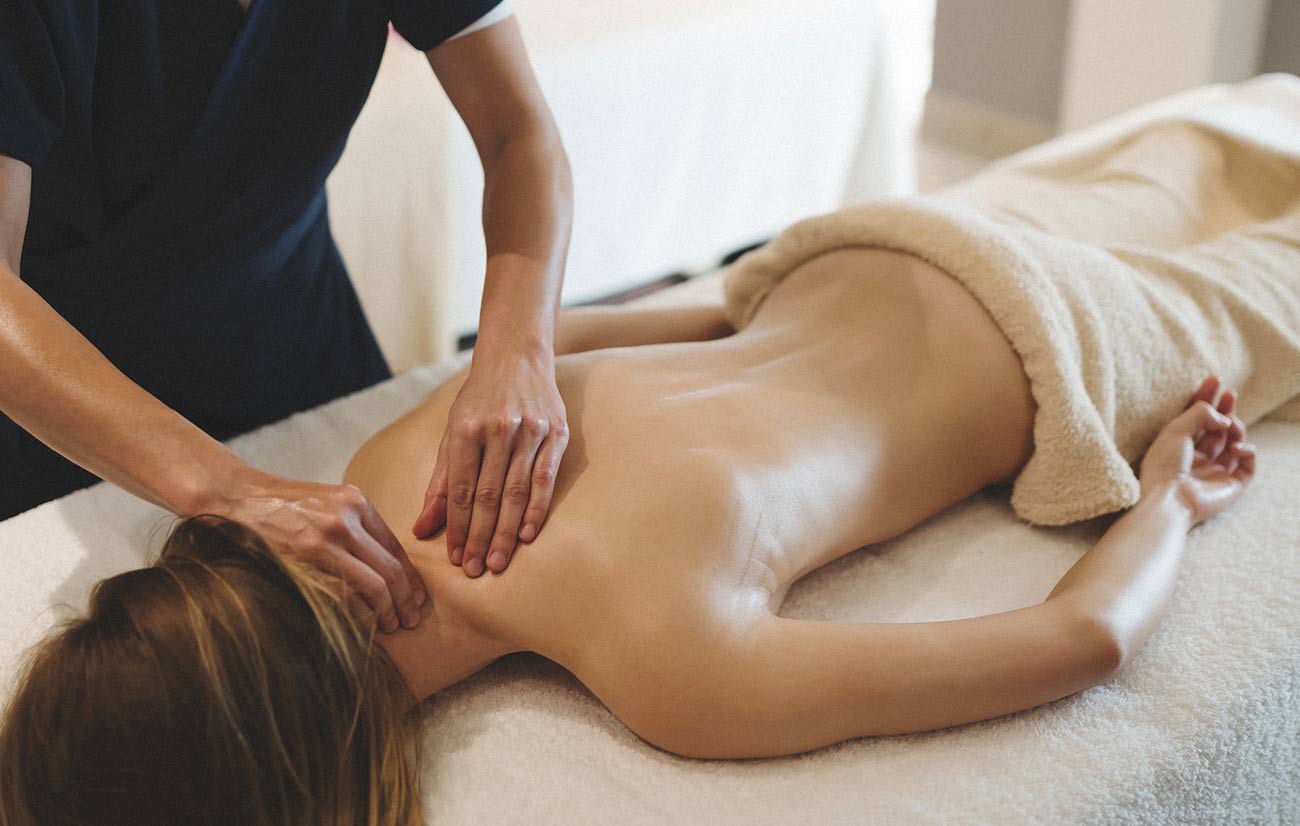
Deep Tissue Massage is typically performed on a massage table with you partially undressed and covered by a sheet. Your therapist uses slower strokes and deeper pressure to reach the deeper layers of muscle and fascia. Elbows, forearms, and knuckles are often used to apply concentrated pressure to specific areas.
Key techniques include:
- Deep Strokes: Slow, intentional movements that dig deep into the muscle.
- Friction: Moving across the grain of the muscle to break down adhesions.
- Trigger Point Therapy: Applying pressure to specific points that cause referred pain.
Health Benefits of Thai and Deep Tissue Massage
Benefits of Thai Massage
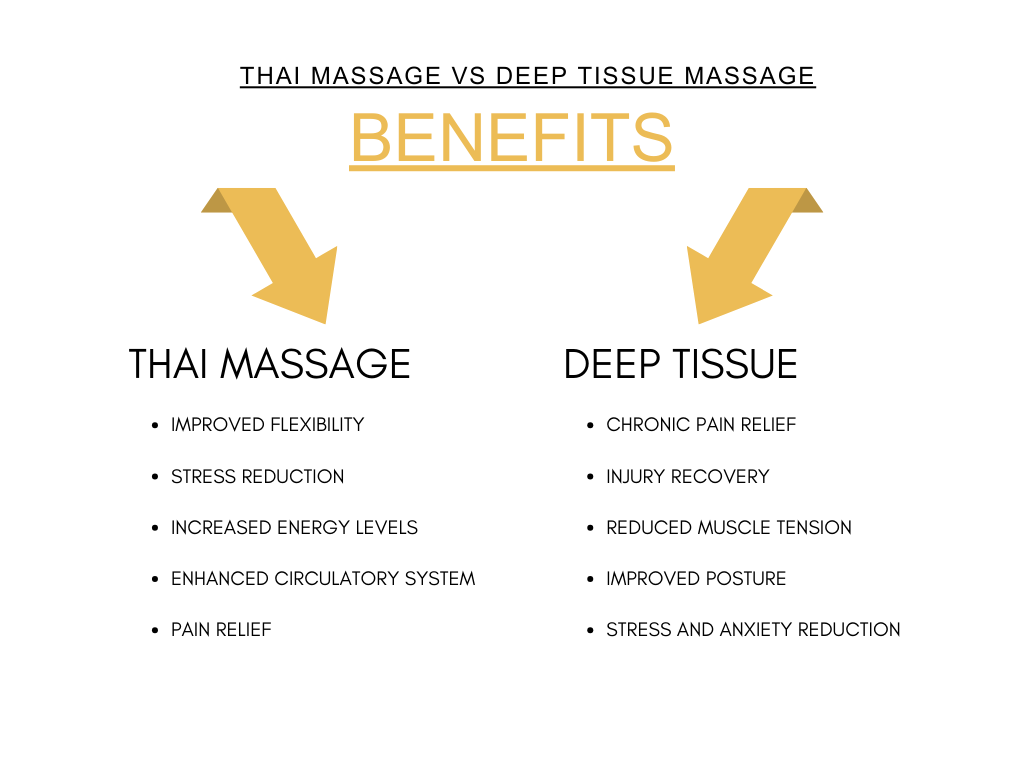
- Improved Flexibility: The extensive stretching can enhance overall flexibility and range of motion.
- Stress Reduction: The rhythmic movements and pressure can help reduce stress and anxiety.
- Increased Energy Levels: Thai Massage can refresh and revive the body by stimulating energy lines.
- Enhanced Circulatory System: The combination of pressure and stretching can improve blood circulation.
- Pain Relief: Often used to help ease tension headaches, back pain, and shoulder pain.
Benefits of Deep Tissue Massage
- Chronic Pain Relief: Often used to help manage chronic pain conditions such as low back pain, neck pain, and sciatica.
- Injury Recovery: Can support the recovery of sports injuries by working into scar tissue and improving flexibility.
- Reduced Muscle Tension: Targeted pressure can relieve tight muscles and knots.
- Improved Posture: By addressing muscle imbalances it can help improve posture and reduce the chance of repetitive strain injuries.
- Stress and Anxiety Reduction: The deep, methodical strokes can promote relaxation and mental clarity.
Applications in Health and Wellness
Thai Massage Applications
Thai Massage is often used as a holistic treatment to maintain overall health and prevent disease. It benefits individuals looking to improve their flexibility, reduce stress, and boost their energy levels.
It is also effective in alleviating symptoms of chronic conditions such as arthritis and fibromyalgia. Athletes and active individuals often use Thai Massage to enhance their physical performance, recovery and pain management.
Deep Tissue Massage Applications
Deep Tissue Massage is commonly recommended for individuals dealing with chronic pain, muscle injuries, or postural problems. This massage is widely used in physical therapy and rehabilitation settings to address musculoskeletal issues.
People suffering from conditions like piriformis syndrome, myofascial pain syndrome, and repetitive strain injuries can benefit significantly from this type of massage. It is also a popular choice for those seeking relief from stress and anxiety.
Comparing Thai Massage vs. Deep Tissue Massages
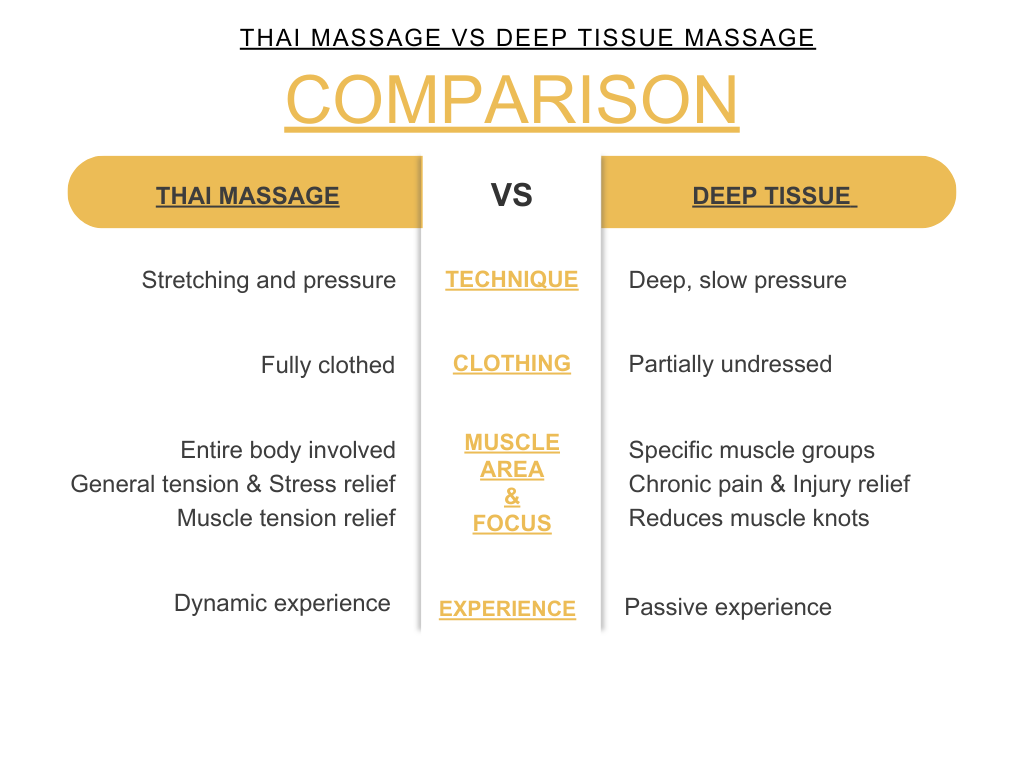
Here’s a simple side-by-side breakdown to help you compare the two styles more clearly.
Technique and Pressure
- Thai Massage: Involves a combination of stretching and pressure along energy lines, performed with the client fully clothed on a mat. The pressure is varied and often involves the entire body.
- Deep Tissue Massage: Focuses on deep, slow pressure targeting specific muscle groups, typically performed on a massage table with the client partially undressed. The pressure is deep and concentrated on specific areas.
Flexibility and Stretching
- Thai Massage: Emphasizes extensive stretching to improve flexibility and range of motion.
- Deep Tissue Massage: While it can improve flexibility, the primary focus is on relieving deep muscle tension.
Pain and Tension Relief
- Thai Massage: Effective for general tension relief, stress reduction, and improving energy flow.
- Deep Tissue Massage: Particularly effective for chronic pain, injury recovery, and reducing muscle knots.
Overall Experience
- Thai Massage: A more interactive and dynamic experience, often compared to assisted yoga.
- Deep Tissue Massage: A more passive experience, with the therapist applying targeted pressure to specific areas.
Potential Risks and Considerations
Both Thai Massage and Deep Tissue Massage are generally safe when performed by trained professionals. However, there are some important considerations to keep in mind.
Thai Massage Risks
- Not suitable for certain medical conditions, such as severe osteoporosis, recent surgery, or acute injuries.
- Some people may find the stretching and sustained pressure uncomfortable, especially if they are not used to assisted stretching techniques.
Deep Tissue Massage Risks
- Temporary soreness is common and may last a day or two after treatment.
- Not recommended for individuals with certain conditions, such as blood clotting disorders, recent surgeries, or severe osteoporosis.
Massage therapy can support many day-to-day concerns, but it is not a replacement for medical care. If you are managing a health condition, are pregnant, or are unsure whether massage is appropriate for you, speak with your physician first and inform your therapist so your session can be adapted safely.
Book a Thai or Deep Tissue Massage in Sherwood Park
In summary, Thai Massage and Deep Tissue Massage serve different purposes. Thai Massage focuses on assisted stretching, energy flow, and overall mobility, while Deep Tissue Massage targets deeper muscle layers to address chronic tension and specific areas of discomfort.
The right choice depends on how your body feels and what you want from your session. If you’re looking for movement and flexibility, Thai Massage may be a better fit. If you’re dealing with persistent tightness or specific muscle pain, Deep Tissue Massage may be more appropriate.
Visit our Traditional Thai Massage or Deep Tissue Massage service pages for more details, or book directly below. Direct billing is available for most major insurance providers.