Reviewed by Registered Massage Therapist Nuchanart (Mew) Kachowski
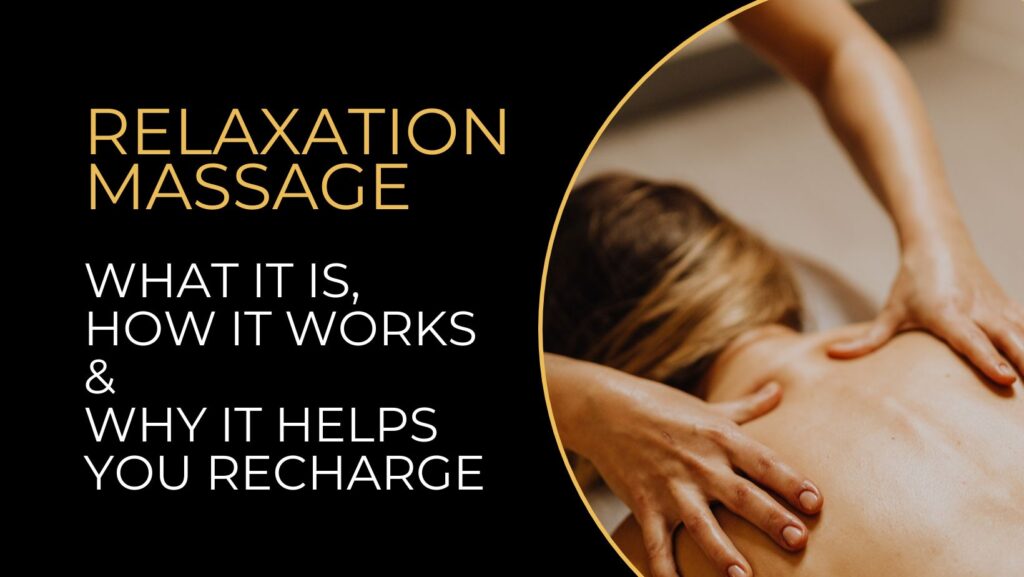
A relaxation massage is one of the most effective ways to naturally calm your body, ease tension, and recharge your mind.
When most people picture a “relaxing massage,” they imagine dim lights and a spa playlist. That’s part of the experience, but the real value goes deeper.
A relaxation (or Swedish) massage is designed to help your nervous system downshift, unclench post-work tension, and make sleep come more easily on the nights you need it most.
If you’ve been feeling “on” all the time, tired, wired, or carrying your shoulders up by your ears, then this style of massage can help bring your body back toward neutral. Many clients describe feeling lighter, clearer, and more settled afterward.
Our RMT-led approach focuses on comfort, steady rhythm, and an unhurried pace so your mind and body have time to catch up with each other.See Five Benefits of a Relaxation Massage to explore how this style supports stress relief, better sleep, and long-term wellness.
What Is a Relaxation (Swedish) Massage
A relaxation massage is a gentle, full-body treatment that uses light to medium pressure, long flowing strokes, and a consistent rhythm to help your body and mind fully unwind.
Rather than focusing on specific injuries or areas of pain, this style of massage supports your body’s natural ability to release tension, improve circulation, and settle into a calmer state. When stress levels drop, breathing deepens, muscles soften, and the mind follows.
Core elements you’ll notice, and how they help you:
Pressure
Smooth, steady, and predictable—no rushing or abrupt movements. A consistent rhythm helps your nervous system recognize safety and begin to slow down.
Pace
Light to medium, always adjusted to your comfort. This encourages relaxation without strain, easing tightness while keeping your body at ease.
Coverage
Usually full-body, with extra attention to the back, neck, and shoulders where stress tends to build. Balanced coverage helps release tension evenly so you leave feeling light all over.
Comfort
A warm table, supportive bolsters, and scent-free options ensure your body feels grounded and comfortable, allowing you to fully let go without distraction.
Relaxation massage differs from clinical or therapeutic treatments that work into deeper muscle layers or focus on injury recovery. Its purpose is to help you reset, recharge, and feel restored.
When a Relaxation Massage Fits Best:
- You’re carrying everyday stress, mental overactivity, or general tightness.
- You want to sleep better or feel calmer heading into a busy week.
- You’re new to massage and want a gentle first experience.
- You enjoy the feeling of a whole-body reset more than intense, spot-specific work.
For a deeper dive into how relaxation massage relates to anxiety and sleep concerns, see Can a Relaxation Massage Help with Anxiety and Sleep Issues?
How Relaxation Massage Works
A relaxation massage helps your body switch from a state of constant alertness to one of genuine rest, where stress eases and natural recovery can begin. You don’t need a physiology textbook to understand why you feel different afterward as the effects are simple, natural, and easy to feel.
Nervous System Regulation
Steady, soothing touch can help your body shift toward the parasympathetic state—the part of your nervous system responsible for rest and digest.
In plain terms, it’s the body’s way of slowing down after being “on” all day. When this happens, your breathing deepens, muscles stop bracing, and your heart rate gently settles.
Over time, regular sessions can make it easier for your body to find this calm state more quickly, even outside of the treatment room.
Gentle Circulation and Tissue Comfort
The long, rhythmic strokes used in relaxation massage encourage steady blood flow and a feeling of lightness in your muscles.
This isn’t deep tissue work, but it can help those desk-bound tight spots—your neck, upper back, and hips—feel less compressed and more mobile.
Many clients describe it as “moving from stiff to easy,” not “intense to sore.”
Mood and Emotional Ease
Supportive, predictable touch provides a sense of safety that your body instinctively recognizes.
Many clients report feeling emotionally lighter, more grounded, or simply more themselves after a session. While everyone’s experience is unique, this type of massage helps set the stage for emotional balance: fewer racing thoughts, calmer breathing, and a quieter mind.For a deeper look at these benefits in everyday terms, see Five Benefits of a Relaxation Massage.
Who Benefits Most
A relaxation massage is ideal for anyone feeling tense, overworked, or mentally drained who wants a simple, natural way to help their body and mind recover.
It supports people in all walks of life, from those juggling busy schedules to anyone looking for steadier sleep, fewer aches, and a calmer state of mind.
You may benefit most from this type of massage if you:
- Feel wound up from work or constant multitasking.
- Struggle to fall asleep because your mind stays active.
- Carry mild tightness from sitting, standing, or driving for long periods.
- Want to feel calmer without the intensity of deep pressure work.
- Prefer a smooth, steady experience that’s easy to relax into.
When to Book
The best time to schedule your session depends on your stress level, sleep quality, and overall wellness goals.
Frequent treatments help your body maintain calm more easily, while monthly visits provide steady maintenance between busy periods.
- High-stress periods: Weekly or bi-weekly sessions can reduce accumulated tension and help prevent burnout.
- Improving sleep: A few sessions close together can help your body find a healthier rhythm and make winding down at night easier.
- Maintaining balance: Monthly appointments can keep stress from rebuilding and support ongoing recovery.
How Sessions Are Adjusted for Comfort
Each session is personalized to match your comfort level, preferences, and physical needs.
Small adjustments during your appointment help you stay relaxed and ensure a safe, effective experience.
- Pressure: Always adjustable—your therapist can keep it light or gently increase firmness while staying within the relaxation range.
- Products: Scent-free, hypoallergenic lotion is standard. You can add aromatherapy on hot towels for a calming scent without direct skin contact.
- Positioning: Side-lying or extra bolstering is available to support comfort, circulation, or pregnancy positioning.
Health note: Relaxation massage is generally safe for most people. If you’re pregnant, recovering from an injury or surgery, or managing a medical condition, speak with your doctor first and let your RMT know.
What Results Feel Like
After a relaxation massage, most people notice a calm, balanced feeling that can last for hours or even days.
Your body feels lighter, your breathing deepens, and everyday stress seems easier to manage. Clients often describe these sensations in a few common ways:
- Immediate calm: Shoulders soften, muscles loosen, and it feels easier to take a full breath again.
- Restful evenings: A quieter mind makes it easier to unwind and fall asleep naturally.
- Improved movement: Simple motions—like turning your head, reaching overhead, or bending—feel smoother and less restricted.
- Emotional release: Many people describe a sense of “letting go,” realizing how much tension they were holding without noticing.
Think of each session as clearing the busy chaos of the week rather than fixing one specific issue. With regular care, your body begins to recognize the pattern of relaxation more quickly, making it easier to return to that calm state between treatments.
How Often Should You Book
The right frequency for relaxation massage depends on your stress level, goals, and how long the benefits last between sessions.
Rather than focusing on intensity, aim for consistency. Steady care helps your body stay balanced and makes each session more effective over time.
Use this quick guide as a starting point, then fine-tune your schedule with your RMT:
- High-stress or anxious seasons: Weekly or every two weeks to manage tension before it builds.
- Sleep support and nervous system balance: Every two weeks to help your body maintain a relaxed rhythm.
- General wellness and prevention: Every four weeks (monthly) for steady maintenance.
- Busy schedule or tighter budget: Every 4–6 weeks with simple self-care between sessions.
Once you find a rhythm that feels right, you can taper to a sustainable pace while keeping the benefits that matter most.For a deeper look at how to plan your sessions with lifestyle balance, and what consistency looks like in real life, see How Often Should You Get a Relaxation Massage?.
What Happens During Your Session
A relaxation massage follows a calm, predictable flow designed to help you feel safe, comfortable, and fully at ease.
Each part of the process is intentional—it’s about creating the right environment for your body to release stress and settle into rest.
- Before you begin: Your therapist takes a moment to understand how you’re feeling, talk through pressure preferences, and check for any areas that need extra care.
- Settling in: You’ll have time to get comfortable on the table—covered and supported so you can fully relax from the start.
- During the massage: Smooth, steady strokes with light to medium pressure help your breathing slow and your body unwind naturally.
- After your session: The pace slows gradually so you can reorient, stretch if needed, and carry that calm feeling with you into the rest of your day.
If you’d like a detailed, step-by-step walkthrough—including what happens before and after your appointment—see What to Expect During Your First Relaxation Massage.
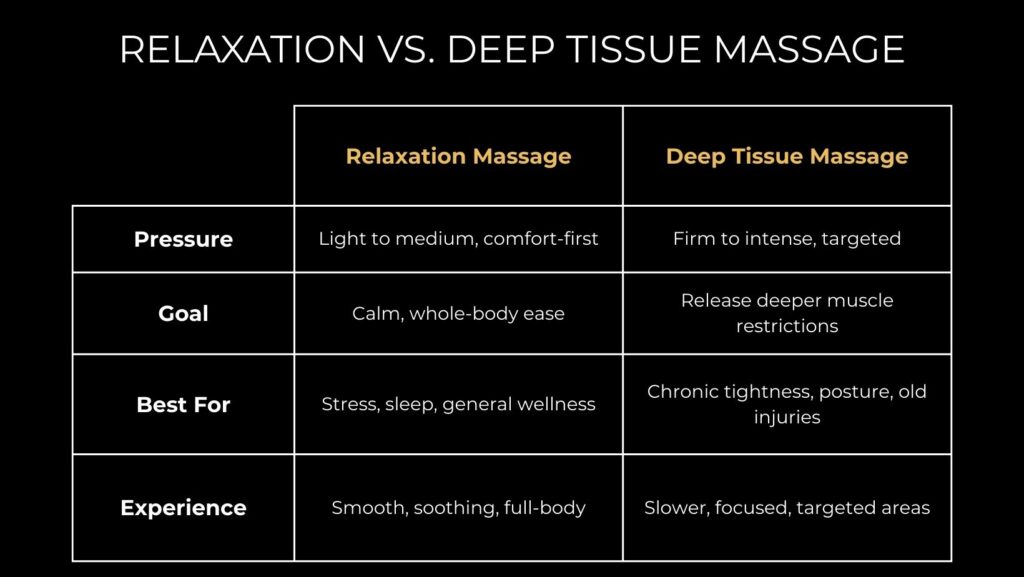
Relaxation vs. Deep Tissue at a Glance
Relaxation massage and deep tissue massage share some techniques, but they’re designed for different goals.
Relaxation work focuses on calming the nervous system and easing overall tension, while deep tissue targets specific problem areas and long-term mobility issues.
| Relaxation Massage | Deep Tissue Massage | |
| Pressure | Light to medium, comfort-first | Firm to intense, targeted |
| Goal | Calm, whole-body ease | Release deeper muscle restrictions |
| Best For | Stress, sleep, general wellness | Chronic tightness, posture, old injuries |
| Experience | Smooth, soothing, full-body | Slower, focused, 1–2 areas |
Neither is “better”—they’re simply built for different outcomes.
Many clients alternate: relaxation when life feels heavy, deep tissue when the body needs focused attention.
For a detailed comparison, including how to choose between them, read Swedish (Relaxation) Massage vs. Deep Tissue Massage: Which Is Right for You?.
Customized for Your Comfort
At Gold Pro Massage, every relaxation massage is designed around you.
This style of massage is gentle by nature and suits nearly everyone, but the real difference lies in how it’s customized. Each session is adjusted to fit your current needs, adapting pressure, pace, and positioning to what helps you feel most comfortable and supported.
Here’s how we tailor each session:
- Your health and comfort come first. Let your therapist know about any recent injuries, medications, or health changes so pressure and positioning can be adjusted safely.
- Sensitive skin or scent preferences. We use scent-free, paraben-free, hypoallergenic products by default. If you enjoy aromatherapy, it can be added through warm towels rather than oils on the skin.
- Finding your perfect pressure. You control how light or firm the massage feels. Gentle pressure can include slightly deeper moments without crossing into deep tissue work.
- Pregnancy support. Prenatal positioning and techniques keep you comfortable and supported. Most clients begin after the first trimester with guidance from their doctor.
After injury or with chronic pain. Relaxation massage can stay light and calming to encourage recovery and circulation. If you need more focused treatment, your RMT or healthcare provider can recommend combining it with deep tissue or physiotherapy.
FAQs
Is relaxation massage the same as Swedish massage?
Yes. “Relaxation massage” is another name for Swedish techniques that use long, flowing strokes to reduce tension and calm the nervous system.
Will I feel sore afterward?
Most people feel loose, light, and sleepy rather than sore. Mild tenderness can occasionally happen if muscles were tight, but it fades quickly and shouldn’t feel uncomfortable.
Can I ask for firmer pressure without turning it into deep tissue?
Absolutely. You control the pressure throughout your session. Your RMT can work slightly deeper while keeping the overall flow gentle and soothing.
How long should I book?
A 60-minute session offers a full-body reset and is perfect for first-timers. A 90-minute session allows for slower pacing and extra focus on areas that hold more tension. Here at Gold Pro we also offer 45-minute sessions
Can relaxation massage help with stress headaches or “tech neck”?
It can help ease the tension patterns that often contribute to those symptoms. If headaches are frequent or severe, check with your doctor and share any recommendations with your RMT so we can adapt your session.
What should I do after my massage to make the calm last?
Drink water, move gently, and give yourself time to stay in that relaxed state. Light stretching or a short walk can help maintain circulation and prolong the benefits.See What to Expect During Your First Relaxation Massage for more aftercare tips
The Lasting Impact of Relaxation Massage
Relaxation massage helps your body remember what calm feels like.
With regular care, your body begins to find calm more easily, turning relaxation into a familiar rhythm instead of a rare escape.
How to Book
If you’re ready for a calmer week and a better night’s sleep, we’d love to take care of you.
Here at Gold Pro Massage in Sherwood Park, every session is led by our team of RMTs, with a focus on comfort, communication, and care that moves at your pace.
Book your Relaxation Massage in Sherwood Park and find your ideal rhythm — weekly during busy seasons, bi-weekly for steady sleep support, or monthly for long-term wellness.
You can book online anytime or contact us directly to find the time that works best for you.
Note: This article is for educational purposes and not intended as medical advice. Massage therapy can help with many day-to-day concerns, but if you’re managing a health condition or pregnancy, please speak with your doctor first and let your therapist know so your session can be adapted safely.