Reviewed by Registered Massage Therapist Nuchanart (Mew) Kachowski
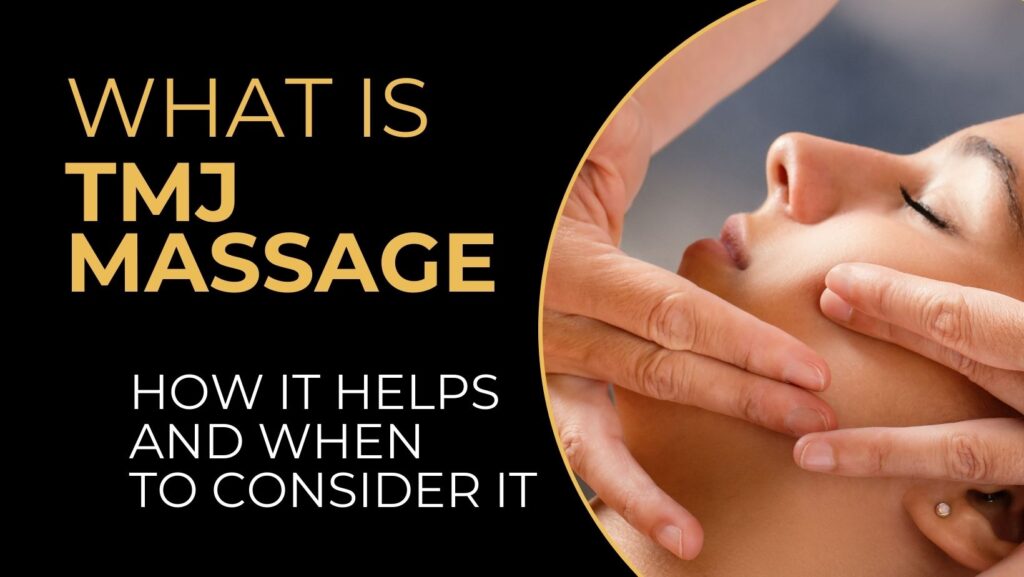
Jaw pain, headaches, facial pressure, and neck tension often trace back to the temporomandibular joint (TMJ), the joint that controls how your jaw opens, closes, and moves during everyday activities like speaking and chewing.
Many people live with these symptoms for months or even years without realizing the jaw may be the source. Clicking when chewing, tightness through the temples, clenching during the day, or grinding at night can strain the muscles that support the temporomandibular joint. Over time, that strain builds, limiting movement and creating tension that spreads into the face, head, neck, and shoulders.
TMJ massage focuses on releasing tight jaw and facial muscles to improve movement and reduce jaw pain, headaches, and facial pressure.
If any of this sounds familiar, it helps to know what TMJ massage actually involves and what you can expect from treatment. This guide walks through how the jaw functions, how muscular tension develops, what a session typically feels like, and when it may be time to seek focused support.
TMJ massage focuses on releasing tight jaw and facial muscles to improve movement and reduce jaw pain, headaches, and facial pressure.
How TMJ Problems Show Up in the Body
Jaw tension rarely stays isolated to the jaw. When the muscles around the temporomandibular joint stay tight or overworked, the effects can appear in several areas that may not immediately seem connected.
Because the symptoms vary, many people treat them individually instead of tracing them back to the jaw.
Here are some of the most common ways TMJ-related tension appears:
Jaw Pain, Clicking, and Limited Movement
Pain directly along the jawline is one of the clearest signs. The muscles responsible for opening and closing the mouth can become fatigued from clenching, grinding, or prolonged tension.
Clicking or popping can happen when the joint is not moving smoothly. Tight muscles may pull unevenly on the joint, affecting how it tracks during opening and closing. Some people notice their jaw feels tired while chewing or stiff first thing in the morning.
In more persistent cases, movement may feel restricted. Opening wide, yawning, or chewing tougher foods can feel uncomfortable or limited. Over time, this reduced mobility can reinforce more tension, creating a cycle that keeps the area tight.
Headaches Around the Temples and Sides of the Head
The temporalis muscle sits along the side of the head and plays a major role in jaw movement. When this muscle tightens, it can create pressure that feels like a tension headache.
People often describe aching near the temples or along the sides of the head. Because the discomfort feels like a typical headache, the jaw connection is easy to overlook.
Repeated clenching or grinding can keep these muscles in a constant state of contraction. When that tension continues for long periods, the nervous system can become more reactive, which may make pain feel more intense or more frequent.
Ear Pressure, Fullness, or Aching Without Infection
The jaw joint sits very close to the ear canal. When surrounding muscles tighten, they can create sensations that feel like ear pressure, fullness, or dull aching.
Many people seek treatment for ear concerns only to be told there is no infection present. In some cases, muscular tension around the TMJ contributes to that sensation.
Some people also notice mild sinus pressure or a sense that breathing feels slightly restricted through the nose when facial muscles are tight. As the jaw and surrounding tissues relax, that pressure can ease.
Neck and Shoulder Tension That Will Not Fully Resolve
The jaw, head, and neck work together constantly. When the jaw muscles tighten, nearby neck muscles often compensate.
This can lead to stiffness at the base of the skull, tightness through the sides of the neck, and tension spreading into the upper shoulders. General neck massage may provide temporary relief, but tension can return if the jaw component remains unaddressed.
Posture also plays a role. Forward head positioning places additional strain on the jaw and surrounding muscles, reinforcing the cycle.
Teeth Grinding and Clenching Patterns
Grinding at night or clenching during the day places continuous stress on the jaw muscles. Even subtle clenching during concentration can keep these muscles engaged for hours.
Over time, repeated contraction limits circulation and increases muscle sensitivity. That is when soreness, fatigue, and facial pressure begin to build.
Many people are unaware they grind until a dentist notices wear patterns or a partner hears it during sleep.
Facial Tightness and Pressure That Builds Over Time
Some people experience a general sense of facial tightness rather than sharp pain. The cheeks may feel heavy, the jawline may feel dense or sore to touch, and the temples may feel tight.
This type of pressure often fluctuates with stress levels. Busy periods, long workdays, or emotional strain can intensify the sensation without any direct injury to the joint.
When tension has been present for an extended period, the body can begin to hold that pattern automatically. Addressing the muscular component can help reduce that ongoing strain and calm the surrounding tissues.
TMJ-related tension looks different from person to person. Some experience mainly jaw soreness. Others deal primarily with headaches, ear pressure, or neck strain. In many cases, several of these patterns occur together.
Recognizing how these symptoms connect is often the first step toward addressing the source rather than managing each area in isolation.
If you want a deeper look at how these symptoms are linked, you can read more about how TMJ can cause headaches, ear pain, and neck tension.
What Is TMJ Massage?
TMJ massage is a focused treatment that works on the muscles controlling jaw movement. Instead of addressing general neck or shoulder tension alone, it targets the jaw, face, temples, and surrounding areas that influence how the temporomandibular joint moves.
The goal is simple: reduce excessive muscle tension, restore smoother movement, and decrease the pressure patterns that contribute to pain.
TMJ Massage treatment often includes:
- Gentle release along the jawline
- Work through the temples and facial muscles
- Attention to the upper neck
- Support for posture and surrounding tension patterns
In some cases, intra-oral techniques may be used. This involves gloved work inside the mouth to access deeper jaw muscles that cannot be reached externally. These muscles are often heavily involved in clenching and grinding patterns.
TMJ massage is controlled and intentional. It does not involve forceful joint manipulation. The focus is on calming overworked muscles, improving circulation, and helping the tissues return to a more balanced resting state.
When muscle tension decreases, jaw movement can feel smoother. Pressure in the temples may lessen. Neck strain may ease. For some people, the change feels immediate. For others, it builds over several sessions as long-standing tension patterns begin to soften. This can be especially helpful for people who clench or hold tension during stress without realizing it.
TMJ massage can also help interrupt the cycle of constant contraction. When muscles remain tight for long periods, the nervous system stays on alert. Targeted release can encourage a more relaxed response, allowing the body to move out of that heightened tension state.
This approach focuses on restoring comfort and natural movement in the muscles that support the jaw.
If you’re wondering how effective this type of treatment can be, you can read more about whether TMJ massage works and what people typically notice after treatment.
The goal is simple: reduce excessive muscle tension, restore smoother movement, and decrease the pressure patterns that contribute to pain.
What a TMJ Massage Session Feels Like
A TMJ massage session is structured and focused, with each step designed to address tension patterns in a controlled and supportive way.
Talking Through Your Symptoms Before Treatment Begins
Your session begins with a brief discussion about your symptoms, jaw habits, posture, and any dental or injury history. Your therapist may assess how your jaw opens and closes and identify areas of tightness along the jawline, temples, neck, and shoulders.
This helps tailor the treatment to your specific tension pattern.
Targeted Work Along the Jaw, Temples, and Neck
Treatment focuses on controlled, precise release rather than broad pressure. Work along the jaw and temples can feel specific and intentional. Areas that have been tight for a long time may feel tender, but pressure remains manageable and communication is encouraged throughout.
The goal is steady, focused release rather than intensity.
Intra-Oral Techniques May Be Used When Appropriate
In some cases, your therapist may recommend working inside the mouth to access deeper jaw muscles that cannot be reached externally. This is always discussed beforehand and only done with clear consent.
Gloved techniques are controlled and brief. Many clients find that once they understand the purpose, the sensation feels focused rather than uncomfortable.
Intra-oral work is not required in every session. Treatment is adapted to your comfort level and needs.
What Many People Notice After Treatment
As tension begins to decrease, movement often feels smoother and less restricted. Pressure through the temples may lessen. Some people describe a sense of circulation returning to the face or a lightness through the jaw.
For some, the change feels immediate. For others, improvement becomes more noticeable over the next day as the tissues settle.
Greater Awareness of Clenching and Tension Patterns
It is common to leave the session more aware of how often the jaw tightens during stress or concentration. Recognizing those habits can help prevent tension from building again between treatments.
The overall aim is to reduce strain, restore ease in movement, and support long term comfort.
When TMJ Massage May Be Most Helpful
After learning what TMJ tension looks like and what treatment involves, the natural question becomes whether this approach fits your situation. Not every jaw issue has the same cause, and understanding the difference can help you decide your next step with confidence.
TMJ massage is often a good fit when discomfort feels rooted in muscle tightness, fatigue, or lingering pressure. Muscle-driven patterns often feel heavy, overworked, or stress-related. They tend to build gradually and fluctuate depending on posture, workload, or emotional strain.
How to Tell if TMJ Massage Is a Fit
TMJ massage may be worth considering if:
- Your jaw feels tight, tired, or heavy rather than unstable
- Discomfort builds gradually throughout the day
- Headaches or facial pressure increase during stressful periods
- Neck tension returns even after general massage
- You grind at night or notice clenching during concentration
- Symptoms come and go rather than remain sharply constant
If muscle tension is driving the symptoms, focused soft tissue work can help restore more ease in jaw movement and reduce the strain that builds throughout the day.
When It May Be Wise to Check With a Provider First
Some jaw concerns involve factors beyond muscle tension. Sudden locking, recent trauma, noticeable bite changes, or significant restriction in movement may benefit from evaluation by a dentist or medical professional.
If symptoms are new, severe, progressively worsening, or linked to injury, it can be helpful to consult a qualified provider before beginning treatment. They can assess whether imaging, dental care, or additional guidance is appropriate.
Massage therapy may still be supportive in certain situations, but it tends to be most effective when muscular tension is a meaningful part of the overall picture.
For many people dealing with long-standing tightness, stress patterns, or clenching habits, TMJ massage offers a focused and practical way to begin addressing that tension. If what you are experiencing feels more muscular than structural, exploring a session may be a reasonable next step.
TMJ massage is often a good fit when discomfort feels rooted in muscle tightness, fatigue, or lingering pressure.
Real Experiences With TMJ Massage
If you’re wondering what this looks like outside of theory, we’ve shared detailed client stories that walk through real experiences with TMJ massage.
One client described long-standing jaw tension, grinding, and facial pressure that eased after focused treatment, with improved mobility and reduced head pressure.
Read how TMJ massage helped relieve jaw pain, headaches, and neck tension.
Another client managing chronic jaw and facial pain shared how TMJ massage became a supportive part of her broader care plan, helping reduce tension and improve daily comfort.
Read how TMJ massage supported chronic jaw and facial pain.
Hearing how others experienced treatment can make it easier to picture what your own session might feel like.
Bringing Your Jaw Back to Ease
Jaw tension has a way of becoming background noise. You adapt to it. You clench without noticing. You work around the pressure. Over time, that constant strain can start to feel normal.
TMJ massage offers a way to bring awareness back to the jaw and reduce the muscular load it has been carrying.
If restoring more natural movement and comfort feels like the right next step, you do not have to navigate it alone.
Book Your TMJ Massage in Sherwood Park
At Gold Pro Massage & Wellness Studio, our Registered Massage Therapists provide focused TMJ treatment in a calm and supportive environment, with each session tailored to your comfort and goals.
Book your TMJ massage appointment today and begin moving toward more comfortable, natural jaw function.
Note: This article is for educational purposes and not intended as medical advice. Massage therapy can help with many day-to-day concerns, but if you’re managing a health condition or pregnancy, please speak with your doctor first and let your therapist know so your session can be adapted safely.