
Reviewed by Registered Massage Therapist Nuchanart (Mew) Kachowski
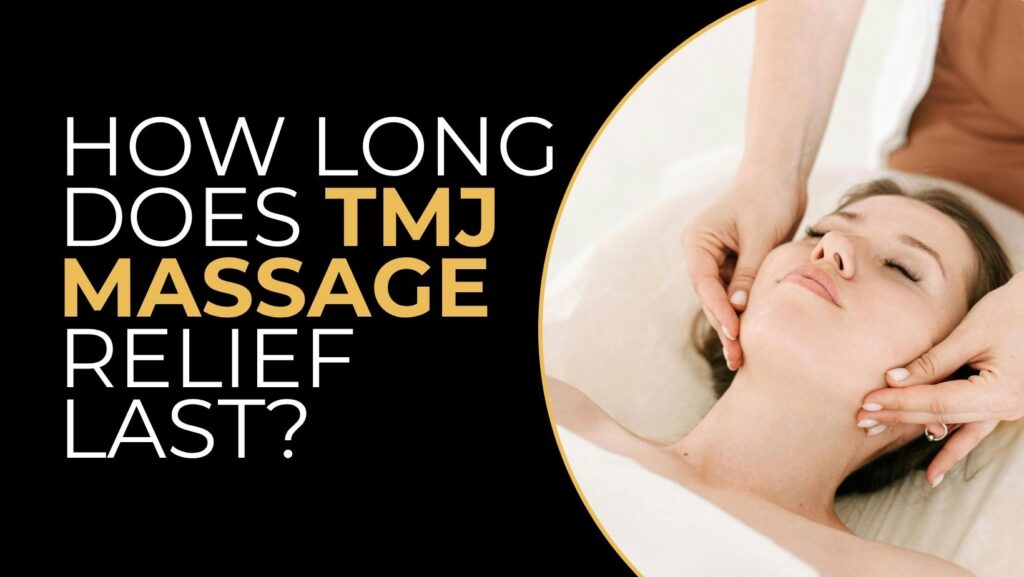
TMJ massage relief typically lasts anywhere from a few days to several weeks depending on how long tension has been building, how active your clenching habits are, and whether the underlying patterns are being addressed between sessions. For most people, the first session brings noticeable relief that gradually fades as daily tension returns. Over several sessions, that relief tends to last longer as the muscles learn to hold a more relaxed state.
There is no single answer that applies to everyone. But understanding what shapes relief duration can help you know what to expect and how to get more out of each session.
Why Relief Duration Varies From Person to Person
TMJ massage works by releasing the muscular tension that builds around the jaw, temples, and upper neck. How long that release holds depends largely on what is driving the tension in the first place.
If your jaw tension developed recently and is connected to a specific period of stress or a change in routine, relief from a single session may last quite a while. The muscles were not deeply conditioned into that tight pattern, so they respond quickly and hold the release.
If your jaw has been tight for months or years, the muscles have essentially learned to stay contracted. After a session, they begin to relax. But without enough repetition, they tend to drift back toward the pattern they know. Relief is real, but it does not hold as long in the early stages of treatment.
Clenching and grinding habits play a significant role as well. If you clench during concentration, grind at night, or carry jaw tension during stressful periods, those habits actively work against the relief a session creates. The muscles are being re-tightened between appointments. That does not mean treatment is not working. It means the muscles need more consistent input before the new, relaxed state becomes their default.
What to Expect After Your First TMJ Massage Session
Most people leave their first TMJ massage session feeling some immediate change. The jaw may feel looser, less guarded, or easier to move. Pressure through the temples often decreases. Some people describe a sense of circulation returning to the face.
That initial relief can last anywhere from a day or two to closer to a week. For some people it holds longer. For others, particularly those dealing with long-standing tension or active grinding habits, some tightness returns within 24 to 48 hours as the muscles settle back into familiar patterns. It is also common to feel mild tenderness in the treated areas for a day or so, particularly if the jaw muscles were holding significant tension. That settles quickly as the tissue fully responds.
This is expected. It does not mean the session did not work. It means the muscles need more than one exposure before they shift their resting state.
One session can tell you a lot about where your tension is coming from. Several sessions tell your muscles where they are supposed to be.
How Relief Builds Over Multiple Sessions
The difference between first session relief and cumulative relief is meaningful.
After one session, you are essentially interrupting a tension pattern that has been running unchecked. The muscles relax temporarily, but the nervous system and the habits driving the pattern are still in place.
After several sessions spaced consistently over time, something different begins to happen. The muscles start to hold the relaxed state longer between appointments. The jaw feels less reactive day to day. Headaches connected to jaw tension may decrease in frequency, not just intensity. Waking up with a tight jaw becomes less common.
This is not a dramatic shift that happens overnight. It builds gradually as the muscles accumulate more time in a relaxed state than a contracted one. Most people begin to notice the difference somewhere between their third and fifth session, though this varies depending on the factors already mentioned.
For people managing active grinding or significant daytime clenching, progress may be slower because the tension is being reintroduced consistently. That does not mean treatment is not the right approach. It means managing those habits alongside treatment becomes part of the picture.
| Stage | Typical Relief Duration | What Is Happening |
|---|---|---|
| Session 1 | 1 to 3 days | Muscles interrupted, tension pattern still dominant |
| Sessions 2 to 3 | 3 to 7 days | Muscles beginning to hold the release longer |
| Sessions 4 to 5 | 1 to 2 weeks | New resting state starting to form |
| Ongoing maintenance | 2 to 4 weeks | Relief holds consistently, sessions space out naturally |
These are general ranges, not guarantees. Your experience may move faster or slower depending on the factors covered in this post. The direction of travel matters more than the exact timeline.
What Affects How Long Relief Lasts Between Sessions
Several factors influence how well relief holds between appointments.
How much you clench or grind
This is the most significant one. If grinding at night is part of your pattern, the jaw muscles are being activated for hours while you sleep. A session can release that accumulated tension, but without addressing the grinding itself, the cycle continues. Your massage therapist may discuss this with you as part of your care.
Stress levels and how you carry tension
Many people clench without realizing it during focused work, long drives, or stressful conversations. The jaw becomes a place where tension lands unconsciously. High stress periods tend to shorten the window of relief because the muscles are being recruited more frequently and more intensely.
Posture during the day
Forward head positioning, common with desk work and phone use, increases the load on the muscles around the jaw and upper neck. When the head sits forward, those muscles work harder to stabilize the weight of the skull. That added strain can reduce how long relief holds after a session.
What you do in the days following treatment
Staying hydrated, avoiding hard or chewy foods for a day or two after treatment, and being mindful of clenching during the day can all help extend the relief from a session. These are small adjustments, but they reduce the rate at which tension rebuilds.
Session spacing
Leaving too much time between sessions early in treatment can mean starting close to square one each time. Consistent spacing, particularly in the beginning, allows each session to build on the last rather than simply resetting the same tension pattern repeatedly.
Signs That Relief Is Building Over Time
It can be difficult to track progress when changes happen gradually. These are some signs that the work is accumulating rather than just temporarily resetting:
- Relief after each session lasts noticeably longer than it did after the first
- The jaw feels less tight first thing in the morning
- Headaches around the temples become less frequent
- You become more aware of clenching during the day and find it easier to release
- Neck tension through the upper shoulders feels less constant
- You need less time in each session addressing the same areas of tension
None of these changes happen all at once. But over the course of several weeks of consistent treatment, they tend to emerge as a pattern.
How to Support Longer-Lasting Relief Between Sessions
Treatment does most of the heavy lifting, but what happens between sessions matters too.
Notice when you are clenching
Awareness is the first step. Many people have no idea how often they clench until they start paying attention. Checking in on your jaw during focused work, commuting, or stressful moments and consciously releasing the tension can reduce how much rebuilds between appointments.
Let the jaw rest
Resting jaw position should be lips together, teeth slightly apart, tongue resting gently on the roof of the mouth. This position takes pressure off the joint and allows the surrounding muscles to stay at a low level of activity rather than braced.
Be mindful of what you eat after a session
Tough, chewy, or hard foods require significant jaw muscle engagement. In the day or two following treatment, softer foods reduce the demand placed on muscles that are in the process of releasing.
Stay hydrated
Muscles recover and respond to treatment better when tissues are well hydrated. This is not complicated, but it is worth noting as part of how you support the work being done.
Communicate with your therapist
If tension is returning quickly or specific symptoms are persisting, that information is useful. It helps your therapist adjust treatment focus and can point toward habits or patterns worth addressing more directly.
When to Consider Ongoing TMJ Massage Support
For some people, a focused course of sessions resolves the tension pattern and maintenance appointments every few weeks are enough to keep symptoms managed. For others, particularly those with active grinding or high stress lifestyles, more regular support makes sense.
For most people starting treatment, sessions every one to two weeks in the beginning gives each session enough time to settle while keeping the momentum going. As relief holds longer between appointments, spacing can extend naturally to every two to four weeks, and eventually to monthly maintenance once the pattern has shifted.
There is no fixed number of sessions that applies to everyone. What matters is whether symptoms are improving over time and whether relief is holding longer between appointments. Both are signs that treatment is moving in the right direction.
If relief is not lasting at all after several sessions, or symptoms feel unchanged, that is worth discussing with your therapist. It may point toward habits that need more attention, or factors beyond muscle tension that warrant assessment from a dentist or healthcare provider.
If you have been dealing with jaw tension, headaches, or related symptoms for a long time, it is reasonable to expect gradual progress rather than immediate resolution. The muscles took time to develop that pattern. Releasing it consistently takes time as well.
TMJ Massage in Sherwood Park
If you are dealing with jaw tension that keeps returning, or you are wondering whether the relief from your last session is typical, talking through your symptoms with a registered massage therapist is a good starting point.
At Gold Pro Massage and Wellness Studio in Sherwood Park, TMJ massage is tailored to your specific tension pattern. Each session focuses on where tightness is contributing most to your symptoms, with the goal of building lasting relief rather than simply resetting the same pattern each time.
You can learn more about our TMJ Massage Therapy in Sherwood Park or book a session when you are ready.
Note: This article is for educational purposes and not intended as medical advice. Massage therapy can help with many day-to-day concerns, but if you are managing a health condition or pregnancy, please speak with your doctor first and let your therapist know so your session can be adapted safely.