Reviewed by Registered Massage Therapist Nuchanart (Mew) Kachowski
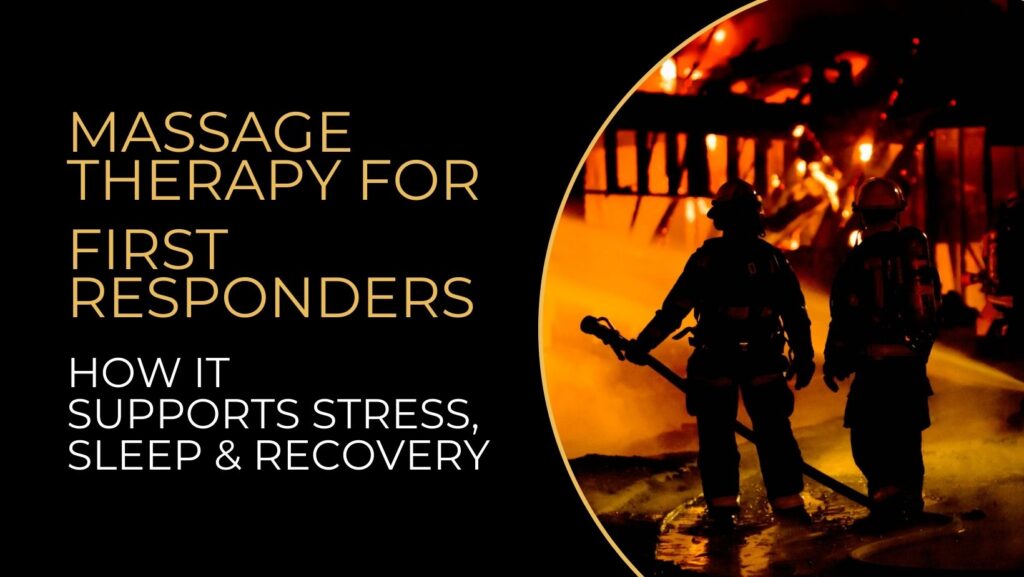
Massage therapy can help first responders reduce stress, ease muscle tension, and improve sleep by supporting both the body and the nervous system.
First responders carry strain in ways most people never see — long shifts, unpredictable calls, heavy gear, and repeated high-adrenaline moments all take a physical and mental toll. A good massage offers a simple, practical way to release tight muscles, calm the mind, and support recovery between shifts.
Why Massage Matters for First Responders
Massage therapy matters for first responders because it helps reduce physical tension and calm the nervous system — two areas heavily affected by long shifts and high-stress calls. It gives your body a chance to decompress, reset, and recover between shifts.
Physical Relief
First responders often carry tightness in the shoulders, low back, hips, and neck from gear, lifting, long hours, or repetitive movement. Massage helps ease this tension so your muscles can soften and your body can move more freely.
Mental Reset
High-adrenaline calls and long periods of staying “on” can overload the nervous system. Many first responders describe feeling “wired but tired,” mentally drained but unable to fully unwind. Massage helps your body shift into a calmer state, slowing everything down so you can breathe, settle, and recharge.
Common Strain First Responders Deal With
First responders tend to face two main types of strain: physical tension from the demands of the job and mental load from constant alertness. These aren’t medical diagnoses — just common patterns seen across police, fire, EMS, dispatch, and ER staff.
Physical Strain (What the body feels)
- Low-back tension from lifting, carrying gear, or long periods driving
- Shoulder, neck, and upper-back tightness
- Hip and leg fatigue from repetitive movement
- General stiffness after long or unpredictable shifts
Mental & Nervous System Strain (What the mind feels)
- Difficulty winding down after shifts
- Light, broken, or restless sleep
- Staying “on alert” long after work ends
- Mental fatigue from high-pressure environments
Massage therapy can’t remove the stress of the job, but it can help your body recover from it so you feel more grounded heading into your next shift.
What Type of Massage Is Best for First Responders?
Not every first responder needs the same style of massage, but most fall into one of three categories:
you’re mentally overloaded, physically sore, or dealing with both.
The right massage depends on which of those you’re feeling most.
1. Relaxation Massage (Swedish Massage)
Best for:
- Feeling mentally overloaded or “always on”
- Difficulty shifting out of work mode
- Trouble sleeping or settling after shifts
- General full-body tightness from stress
How it helps:
- Encourages the body to move out of high alert and into rest
- Softens overall tension without painful pressure
- Slows the nervous system, so breathing deepens naturally
- Helps create mental space, calm, and an emotional reset
Relaxation massage is the decompression side of recovery — especially on weeks when your nervous system feels more tired than your muscles.
2. Deep Tissue Massage
Best for:
- Low-back tightness from lifting or patient movement
- Shoulders and traps are overloaded from gear
- Hip/glute tension from repetitive motion
- Chronic stiffness from physically demanding shifts
How it helps:
- Works into deeper muscle layers to reduce stubborn tightness
- Improves mobility in areas stressed repeatedly on the job
- Helps relieve compression from duty belts, heavy gear, and equipment
- Supports long-term comfort and physical resilience at work
Deep tissue massage is your targeted repair work for the overworked areas that take the most load.
Which Should You Choose?
Use this simple guide:
- Mind feeling overloaded → Relaxation Massage
- Body feeling beat-up → Deep Tissue Massage
The best massage for most first responders is either relaxation massage to calm the nervous system or deep tissue massage to relieve job-related muscle tension, and many people benefit from using both at different times, depending on what they need that week.
Key Benefits of Massage Therapy for First Responders
Massage therapy can support the unique physical and mental demands of first responder work. Here are the benefits most people notice:
1. Reduced Muscle Tension
Helps release tightness in the back, shoulders, hips, and neck from gear, lifting, and long shifts.
2. Better Sleep
Supports your body in shifting out of “alert mode,” making it easier to unwind and fall asleep after high-stress days.
3. Lower Stress & Mental Overload
Encourages slower breathing, reduced muscle guarding, and a calmer nervous system.
4. Improved Mobility
Helps stiff, overworked areas move more freely and feel less restricted.
5. A Dedicated Hour to Reset
Provides intentional downtime to recharge when most of the day is spent caring for others.
How Often Should First Responders Book Massage?
Most first responders benefit from consistent massage because the physical and mental load of the job changes week to week. Your ideal frequency depends on how much stress, tension, or fatigue you’re carrying between shifts.
Weekly or Every 2 Weeks: High-Stress or Heavy-Work Periods
Great for managing tension before it builds, improving sleep, and reducing that “wired but drained” feeling.
Every 2 Weeks: Sleep Support & Nervous System Recovery
Helps your body settle more predictably after adrenaline spikes, night shifts, or irregular sleep patterns.
Every 4 Weeks: General Wellness & Maintenance
A good long-term rhythm if symptoms stay manageable and you’re looking to prevent tension from piling up.
Every 4–6 Weeks: Busy Schedule or Budget-Conscious
Still beneficial when paired with simple home care like stretching, walking, and staying hydrated.
Our Support for First Responders in the Community
At Gold Pro Massage, supporting first responders goes beyond the treatment room. We partner with local organizations and events where police, fire, EMS, and frontline teams serve, volunteer, and give back.
Strathcona County Firefighters Charity Golf Tournament
We provided complimentary massage sessions throughout the event to help firefighters ease shoulder, back, and hip tension after a long day on the course. The tournament raised funds for the Robin Hood Association, and it was a privilege to serve the firefighters who give so much to Sherwood Park.
View the full recap here: Gold Pro Massage Partners with Strathcona County Firefighters for Charity Golf Tournament
RCMP Charity Golf Tournament
Our team offered onsite massage for officers, helping with duty-belt strain, upper-back tension, and general fatigue between holes. The event supported local community initiatives, and we were grateful to partner with the RCMP for a day of connection and service.
See the full highlight here: Gold Pro Massage & Strathcona County RCMP Support Dogs with Wings
These partnerships reflect the same commitment behind our first responder massage services: real support for the people who keep our community safe.
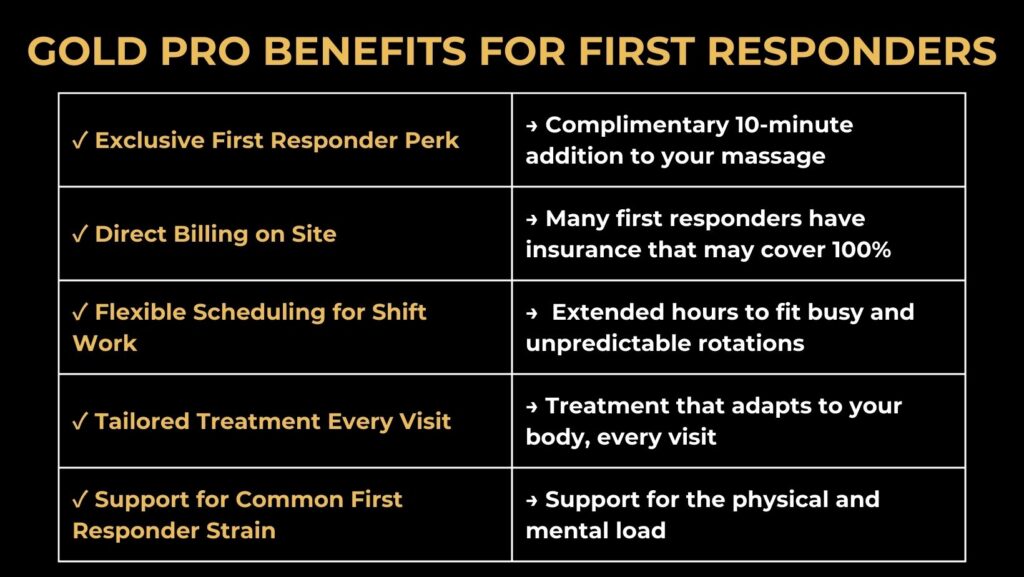
First Responder Benefits at Gold Pro Massage
At Gold Pro Massage, we make it easier for first responders to access regular care especially if you’re managing long shifts, high-call weeks, or the physical load of day-to-day work.
✓ Exclusive First Responder Perk
Here at Gold Pro, all first responders receive a complimentary 10-minute addition to their massage which is a small thank-you for the work you do in our community.
See full details of perks on our Promotions page.
✓ Direct Billing Sometimes Fully Covered
Many first responders, especially municipal employees, have insurance plans that typically cover massage treatments at or near 100%.
We offer direct billing to most major providers to make appointments simple, and in many cases, you may not have to pay out of pocket depending on your specific coverage.
Learn more about direct billing and supported providers.
✓ Flexible Scheduling for Shift Work
We offer extended hours to fit busy and unpredictable rotations:
9 AM – 8 PM (Monday–Saturday) and 9 AM – 5:30 PM (Sunday)
Along with evening availability and easy online booking, sessions can be scheduled around night shifts, alternating weeks, and long stretches on duty.
✓ Tailored Treatment Every Visit
Every first responder’s body carries tension differently. Your RMT adjusts pressure, pacing, and technique each session based on how you’re feeling that day. Were here to help if you need relaxation, deeper pressure, or focused work on specific problem areas.
✓ Support for Common First Responder Strain
We frequently treat patterns seen across firefighters, police, 911 dispatch, ambulance personnel, nurses, doctors, and military roles, including:
- Shoulder and upper-back fatigue
- Low-back tightness from long hours or repetitive movement
- Hip and glute tension from physical strain or gear
- Stress-related muscle guarding and disrupted sleep
Together, these supports are built to make regular, meaningful care easier for first responders while fitting your schedule, your coverage, and the physical and mental demands of the job.
FAQs
Is massage therapy safe for first responders with chronic pain or injuries?
Yes — massage can be adapted to stay gentle, targeted, or somewhere in between. Your RMT will avoid sensitive areas, adjust pressure at any point, and focus only on what feels helpful that day.
Can massage help with back pain from duty belts, gear, or long shifts?
Yes. Many first responders experience low-back and hip tension from gear, lifting, or hours in a vehicle. Massage can help release these patterns and improve mobility over time.
What type of massage is best if I’m stressed, not just sore?
Relaxation massage (Swedish) helps calm the nervous system, reduce that “wired but tired” feeling, and support better sleep after high-stress shifts.
What if I prefer lighter pressure — will the session still help?
Absolutely. Lighter, slower pressure can be just as effective for nervous system recovery and stress relief.
Can massage therapy improve sleep after high-adrenaline shifts?
Yes. Massage supports slower breathing, reduced muscle guarding, and a calmer nervous system — all of which make it easier to unwind and fall asleep.
Is massage covered under first responder health benefits?
Many first responders (especially municipal employees) receive coverage that may pay for most or all of their massage treatments. We offer direct billing to make your appointment simple and stress-free.
Learn more about direct billing.
How often should first responders book a massage?
Weekly or bi-weekly during high-stress periods, every 2–4 weeks for maintenance, or every 4–6 weeks when schedules are tight. Consistency is more important than frequency.
Do you offer any first responder discounts or perks?
Yes — all first responders receive a complimentary 10-minute add-on to any massage. You can view full details on our First Responder Promotions page.Learn more about our perks and discounts.
Book a Massage in Sherwood Park for First Responders
You spend your days taking care of everyone else — we’re here to take care of you.
At Gold Pro Massage, our RMTs personalize each session to the stress, fatigue, and physical strain that first responders face, helping your body reset and recover between shifts.
Book your appointment and give your body the downtime it rarely gets.
Note: This article is for educational purposes and not intended as medical advice. Massage therapy can help with many day-to-day concerns, but if you’re managing a health condition or pregnancy, please speak with your doctor first and let your therapist know so your session can be adapted safely.